

Blog
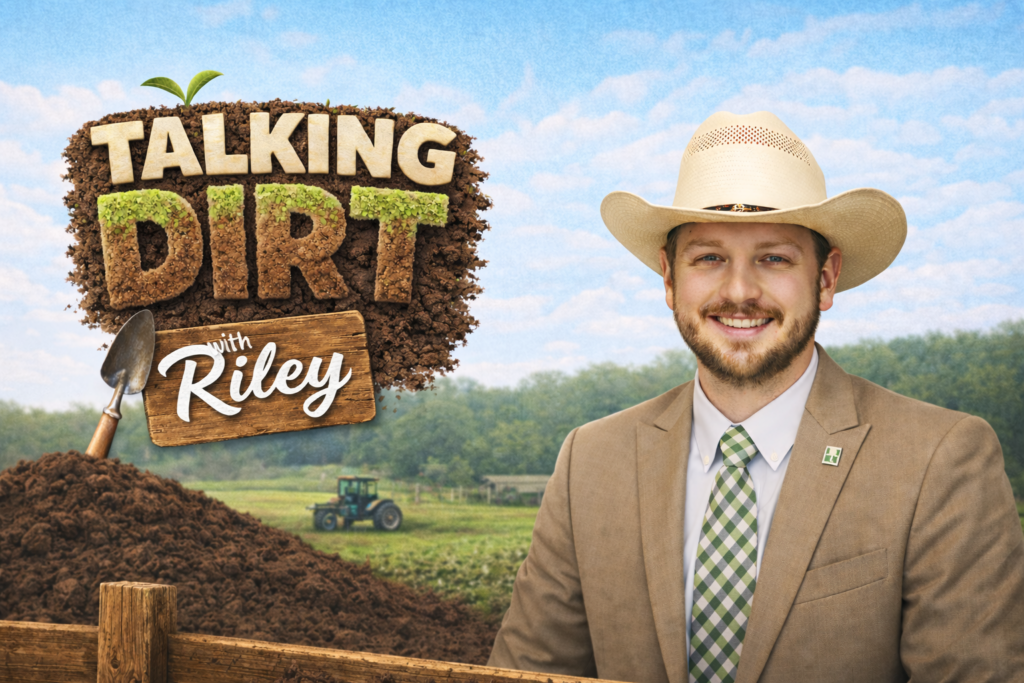
Talking Dirt with Riley: National Agriculture Day
Authored By

It’s National Ag Day! There is no better time to publish the second installment of Talking Dirt with Riley than today. National Ag Day celebrates and recognizes farmers whose hard work keeps the shelves stocked and the dinner table full. But National Ag Day isn’t just about the work that farmers are doing; it recognizes the communities they live in too. Communities like Lula, Ga. where I have roots. National Ag Day reminds us that the places that are often called “fly over” country are the beating heart of our food system.
The U.S. food and ag sector also plays a critical role in America’s economy. Released this week, the 2026 Feeding the Economy Study, co-sponsored by Consumer Brands, finds the industries support nearly 49 million jobs and contribute more than $10.4 trillion to the economy. I’m proud to count my family as part of this economic engine. It’s also a major factor in the consumer packaged goods (CPG) industry, which is the largest domestic manufacturing employer, supporting more than 22 million American jobs that deliver the safe, affordable and convenient products, many of which started on a farm, to consumers everyday.
On this day of recognition, I want to share a little bit about Consumer Brands’ policy priorities in agriculture, which are built around leveraging the amazing work that some of our member companies are doing in the regenerative agriculture space, which is what we will be focusing on in today’s blog. Regenerative agriculture is a term that is getting a lot of attention recently and for good reason; many see regenerative agriculture as the future of farming. But what is regenerative agriculture?
Regenerative agriculture is more of a philosophical concept than a defined one. It centers on new and old practices that restore and repair overall soil health, expand the climate resilience of our farms, promote water conservation and efficiency, and promote biodiversity; in short, regenerative agriculture aims to continuously restore the health of the entire ecosystem that our farms inhabit.
Why is regenerative agriculture important? Soil health. Over centuries, certain farming practices have begun to lead to the depletion of topsoil, which is lost in runoff and erosion that is sped up by excessive tilling, overgrazing, or leaving soil bare. Tilling is the practice of breaking up the soil in preparation for planting. By doing this excessively, soil becomes loose and beneficial microbiological communities below the soil are destroyed, which over time, leads to massive amounts of lost soil when rain and wind sweep across the land. Regenerative practices focus on minimal disturbance of the soil, keeping living roots in the ground, no-till or minimal till practices, enhanced biodiversity, cover cropping, and more. By employing these practices, soil holds firm and prevents excessive runoff.
These practices yield so many benefits for not just farmers, but for the environment, and food supply chain durability. Regenerative agriculture is getting a lot of attention from a bipartisan group of policymakers, and the U.S. Department of Agriculture’s Natural Resources Conservation Service (USDA NRCS) announced a $700 million regenerative pilot program in December of 2025 to expand assistance for farmers looking to make regenerative a reality. Consumer Brands is excited to get involved in the discussion. Delivering safe, affordable, nutritious food is apriority for our food and beverage members and it begins with our great American Farms. Between industry partnerships and government incentives, we are standing on the precipice of a major opportunity for farm longevity, farmer productivity and supply chain stability.
It’s these kinds of initiatives that are at the core of the purpose behind National Ag Day. It’s a way to celebrate and elevate the agriculture industry and all they are doing to keep our country moving forward. So, on this National Ag Day, take a minute to give thanks for our nation’s farmers.
As the sign next to my father’s front door says “if you ate today, thank a farmer”. Happy National Ag Day to all!
Published on March 24, 2026