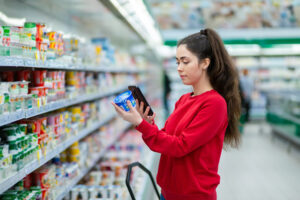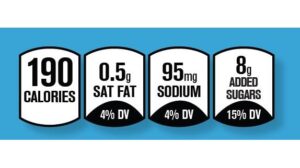




Picture yourself in the grocery aisle, product in hand. Where’s the first place you look on the food package? If you said bottom right corner for a brief overview of the item’s nutritional content, you’re looking at Facts up Front®. Or do you immediately flip the package over for the Nutrition Facts panel? Maybe your holding toothpaste and scan the SmartLabel® QR code for a more in-depth look at the ingredients than what can fit on a label.
However you assess a product before choosing what to buy, there’s a consumer packaged goods (CPG) industry-led initiative that ensures the facts are never farther away than in the palm of your hand. Consumer safety has always been the industry’s unwavering top priority, bolstered by a foundational ethos that has long put transparency front and center.
That’s why we worked with Congress in 1990 to champion the rollout of the Nutrition Facts panel; in 2012 launched Facts up Front, which summarizes important nutrition information from the Nutrition Facts label in an easy-to-understand format on the front of food and beverage packaging; and in 2015 stood up SmartLabel, offering consumers more access to detailed information about a product that can’t fit on the label.
As the largest U.S. manufacturing sector supporting 22 million good-paying American jobs, our industry has worked with Congress, federal agencies and the administration to support efforts to connect consumers with the information they want about the products they rely on every day. We continue to stand ready to work toward our shared goals at the federal level. And, in addition to maintaining our long-standing commitment to transparency and strengthening our existing programs, we are constantly undertaking new initiatives that further increase access to the information consumers need about the products they use every day.
No industry is closer to the consumer, so of course we aren’t going to be satisfied without knowing if consumers are indeed accessing the information they’re looking for. Just this year, Consumer Brands research showed that Facts up Front continues to have the information consumers want, and importantly, is widely recognized: 90% of American adults surveyed said they are aware of the Facts up Front label. Not only are they aware of it, but nearly eight in 10 (79%) said they check it before purchasing a new product.
Further, more than half — 61% — of respondents said they use Facts up Front to inform their purchasing decisions and 75% said they trust the information provided.
And when it comes to SmartLabel, which can be found on more than 100,000 products, we know that consumers access the platform more than 22 million times each year, and of those consumers who use the tool, 94% have used it more than once. Critically, product data on SmartLabel comes directly from each brand owner, ensuring accuracy, and our data has shown that nearly 60% of American adults are more likely to trust brands that feature SmartLabel.
None of that is placating us — there’s more to be done. On top of continuing to strengthen our existing programs and tools, we’re always exploring new routes to increase awareness, enhance access to information and work with policymakers to curate a regulatory framework that is both responsive to consumer preferences and serves their best interests.
For example, this year, we have launched our inaugural National Consumer Transparency Week to put transparency, safety and consumer access front and center. As part of this week, we revealed a new site, truthaboutingredients.org, to offer consumers a one-stop space to get to the facts about the products they choose for themselves and their families’ unique dietary needs.
We are also working to advance common sense regulatory frameworks that promote safety, transparency and help lower costs for consumers as federal agencies like the Department of Health and Human Services (HHS) and the Food and Drug Administration (FDA) look for pathways to continue to enhance the analysis of safe ingredients and increase consumer transparency.
Picture yourself back in that same grocery aisle, product still in hand. All the information is at your literal fingertips, as the industry only continues to connect you directly with more about the products you choose and the brands you trust. All that’s left is to put it in the cart.
Published on December 5, 2025